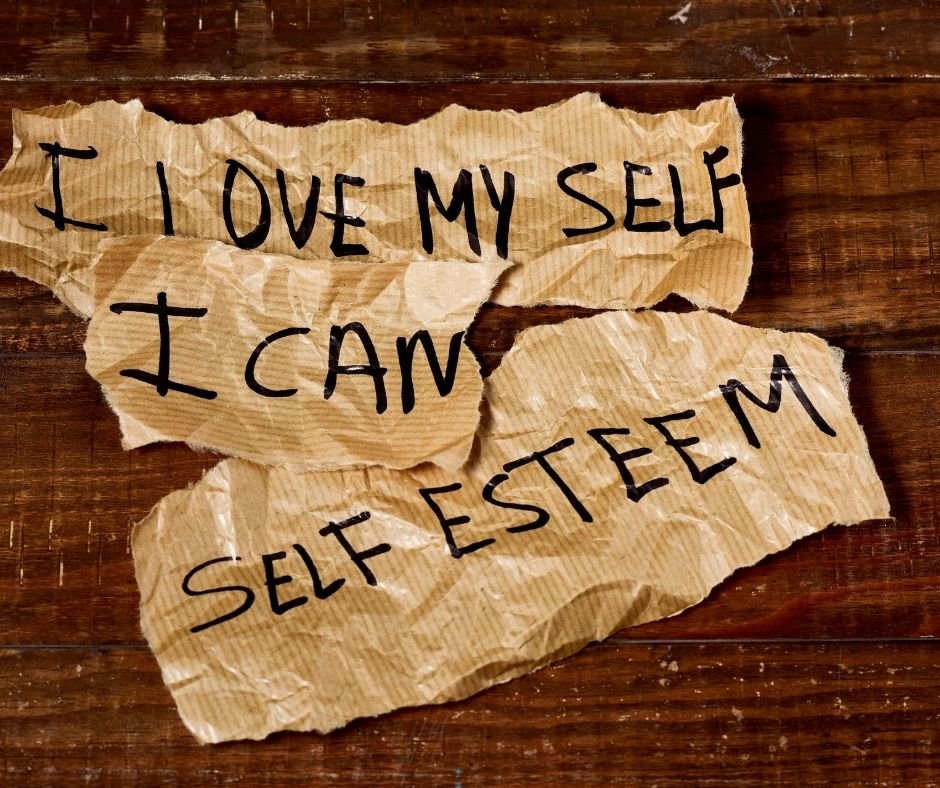
We hear about self-love everywhere. Social media feeds overflow with bubble baths, face masks, and “treat yourself” mantras. But if you’re a high achiever who’s spent years pushing through exhaustion, people-pleasing, and perfectionism, you know that surface-level self-care rituals aren’t enough.
True self-love isn’t about what you do, it’s about how you relate to yourself in every moment, especially the uncomfortable ones.
In this article, I’ll reveal the secret to unlocking authentic self-love and give you practical, embodied steps you can implement today to transform your inner world from criticism to compassion.
Why Self-Love Matters More Than You Think
Here’s the truth: you are with yourself 24 hours a day, 365 days a year.
If your inner world is filled with self-criticism, judgment, and harsh expectations, you’re living in a hostile environment, one you can never escape. No amount of external success, achievement, or validation can compensate for an inner world at war with itself.
This isn’t just uncomfortable, it’s exhausting. It fuels burnout, anxiety, and that persistent feeling that you’re never quite enough.
But here’s the powerful part: love is the vehicle that transforms everything.
It carries with it peace, calm, clarity, and understanding. It cuts through chaos and clutter. It envelops hurt and pain, and drives out fear.
Learning to love yourself isn’t selfish or indulgent; it’s the foundation for sustainable success, authentic relationships, and genuine fulfilment.
The Secret That Unlocks Self-Love: Acceptance
I know what you’re thinking: “Acceptance? That’s it? I’ve heard this before.”
Bear with me. I’m going to shift everything you know about acceptance so it actually works for you, not against you.
What Acceptance Really Means
Acceptance is recognising a situation (or part of yourself) without attempting to change, fix, or protest it.
That’s it. Simple in theory, but challenging in practice because we have tremendous resistance to accepting what we don’t like about ourselves.
Here’s why this matters for self-love: You cannot love what you refuse to accept.
The Party Analogy: Understanding Your Inner World
Imagine you’re at a gathering with a room full of people.
You’re naturally drawn to some, you like their energy, share similarities, and enjoy their company. Connection feels easy.
Then there are others you’re neutral about. You might say hello politely, but you don’t seek them out.
And then there’s that one person who irritates you. Just being near them makes you feel annoyed, frustrated, or uncomfortable. You actively avoid them.
In this scenario, you can easily move around the room, spending time with people you enjoy while avoiding those you don’t.
But what happens when we translate this to your inner world?
What happens when there are parts of yourself that you find unacceptable? Parts you actively dislike, judge, or try to suppress?
Unlike the party, you can’t avoid these parts. They’re with you constantly. And when you reject them, criticise them, or pretend they don’t exist, they don’t disappear, they get louder, more desperate, and more disruptive.

The Transformative Power of Curiosity
Now imagine being the person at the party who feels left out, the one who doesn’t fit in or belong.
You’ve likely experienced the pain, hurt, and shame that comes with rejection. It’s isolating and deeply painful.
Now imagine that a child approaches you with natural curiosity. They don’t judge you or have an agenda. They simply want to know who you are and why you’re here. They treat you like any other person.
It feels refreshing, doesn’t it?
To receive such openness and space to be seen. Maybe the child shows you something they’re interested in, and you feel included. You soften. Your heart opens. You might even catch yourself smiling.
This is acceptance and self-love in action.
The seemingly small act of bringing curiosity to the parts of yourself you don’t like creates profound shifts. When you stop fighting those parts and start listening to them with compassion, transformation becomes possible.
The Four Stages of Self-Love
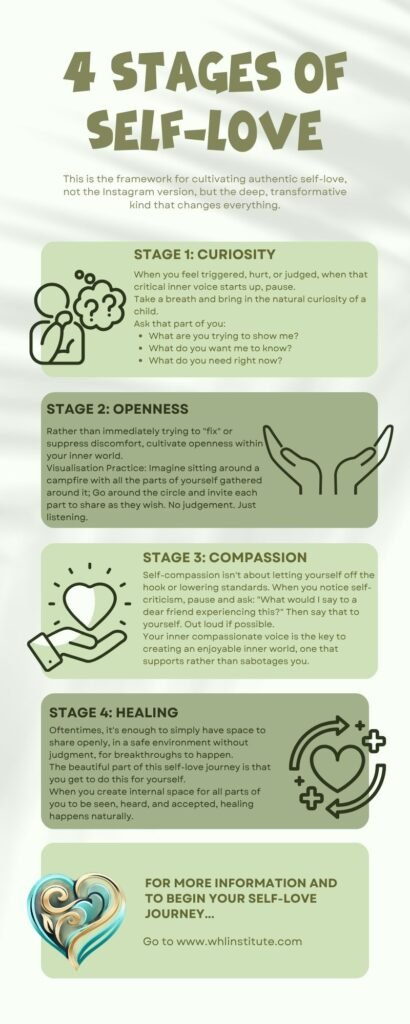
Here’s your practical framework for cultivating authentic self-love- not the Instagram version, but the deep, transformative kind that changes everything.
Stage 1: Curiosity
When you feel triggered, hurt, or judged, when that critical inner voice starts up, pause.
Take a breath and bring in the natural curiosity of a child.
Ask that part of you:
- What are you trying to show me?
- What do you want me to know?
- What do you need right now?
Do this without jumping in with criticism, solutions, or judgment. Just allow space. This simple act of curiosity allows that part to soften and reveal insights you’ve been missing.
Practice: Next time you notice self-criticism arising, instead of believing it or fighting it, get curious. “Interesting. Why is this part of me showing up right now? What’s it trying to protect me from?”
Stage 2: Openness
Rather than immediately trying to “fix” or suppress discomfort, cultivate openness within your inner world.
Visualisation Practice: Imagine sitting around a campfire with all the parts of yourself gathered around it; the achiever, the perfectionist, the scared child, the critic, the dreamer, the exhausted one.
Go around the circle and invite each part to share as they wish. No interrupting, no fixing, no judging. Just listening.
This practice creates an internal democracy where every part of you gets a voice and feels seen. When parts feel heard, they stop shouting for attention in destructive ways.
Stage 3: Compassion
Most of us are intimately familiar with our inner critical voice. It’s loud, persistent, and often sounds like truth.
But your inner compassionate voice? That one needs cultivation.
Why Compassion Matters: Self-compassion isn’t about letting yourself off the hook or lowering standards. Research by Dr. Kristin Neff shows that self-compassion actually increases motivation, resilience, and wellbeing far more effectively than self-criticism.
Practice: When you notice self-criticism, pause and ask: “What would I say to a dear friend experiencing this?” Then say that to yourself. Out loud if possible.
Your inner compassionate voice is the key to creating an enjoyable inner world, one that supports rather than sabotages you.
Stage 4: Healing
Here’s something well-known in the therapy world: oftentimes, it’s enough for someone to simply have space to share openly, in a safe environment without judgment, for breakthroughs to happen.
The beautiful part of this self-love journey is that you get to do this for yourself.
When you create internal space for all parts of you to be seen, heard, and accepted, healing happens naturally. You don’t have to force it or figure it out, you just have to create the conditions.
Common Blocks to Self-Love (And How to Overcome Them)
Block #1: Our Problem-Solving Brain
The Issue: Your primal brain is wired for survival and problem-solving. This is helpful when you’re facing actual threats, but your brain doesn’t understand that feeling unworthy or ashamed isn’t a problem it can solve.
So it drags up every time you’ve felt this way, dissecting each occasion, trying to figure out what you can learn so it never happens again. (Especially at 2 AM when you’re trying to sleep!)
The Solution: Recognise when your brain is in problem-solving mode about emotional experiences. Gently redirect: “Thank you for trying to help, but this isn’t a problem to solve, it’s an experience to feel and process.”
Block #2: No Loving Foundation
The Issue: If you grew up with conditional love, where affection was tied to achievement, behaviour, or pleasing others, your inner blueprint for love is skewed. You may believe you must “earn” love through perfection or productivity.
The Solution: You get to rewrite that blueprint. Through consistent practice of self-compassion, you can create a new internal template for what love feels like, one based on inherent worthiness, not earned approval.
Block #3: Feeling Unworthy
The Issue: This is the most common block I encounter. We tie our worthiness to external factors such as job performance, relationship status, physical appearance, and achievements.
When those things shift (and they always do), the wound of unworthiness reopens.
The Solution: Your worth must be anchored in something deeper. Worthiness is not a feeling, it’s a decision and a belief.
You are worthy because you exist. Full stop. Not because of what you do, achieve, or provide. This truth must become your foundation. You can begin that journey right now, right from where you are here.
Your Higher Mind vs. Your Primal Brain
Here’s something crucial to understand as you navigate this journey:
We are mammals, which means we have a primal brain designed for survival, which is the same brain shared by every other mammal on the planet.
But as humans, we also have a “higher mind”, which is the part that gives us imagination, self-reflection, the ability to think in the third person, and observe our own inner world. This is the part concerned with dreams, desires, happiness, purpose, and thriving.
This part is always connected to love.
As you begin this self-love journey, imagine your higher mind gently taking your primal brain by the hand and walking it toward more love and joy.
Your primal brain won’t understand at first. It will resist. It will feel uncomfortable or strange.
And that’s okay.
Keep going. Your primal brain will eventually follow when it realises that love and acceptance are actually safer than constant vigilance and criticism.

Practical Self-Love Practices You Can Start Today
Morning Check-In (5 minutes)
Before reaching for your phone, place your hand on your heart and ask: “What do I need today? How can I support myself?” Listen without judgment.
Compassionate Self-Talk
Notice when your inner critic speaks. Pause and rephrase with compassion:
- Critic: “You’re so lazy.”
- Compassion: “You’re exhausted and need rest. That’s human.”
Parts Work Journaling
Write from different parts of yourself:
- “The part of me that’s scared wants to say…”
- “The part of me that’s angry needs…”
- “The part of me that knows the truth believes…”
Embodied Self-Love
Self-love isn’t just mental, it’s somatic:
- Place your hands on your heart during difficult moments
- Practice gentle self-touch (hand on cheek, self-hug)
- Move your body in ways that feel good, not punishing
- Use your voice: humming, singing, or speaking kindly to yourself
Why Self-Help Isn’t Always Enough
If you’ve been trying to cultivate self-love on your own and finding it challenging, you’re not alone.
Here’s why solo work has limitations:
- Nervous system regulation happens most effectively in relationship with others
- Blind spots are difficult to see from inside your own patterns
- Trauma responses often require skilled, compassionate guidance to shift
- Sustainable change needs accountability and support
The WholeHearted Approach to Self-Love
At the WholeHearted Living Institute, self-love isn’t a destination; it’s woven throughout every stage of transformation.
Through The Recalibration Mentorship, you’ll experience:
- Personalised practices tailored to your unique blocks and patterns
- Nervous system co-regulation in a safe, trauma-informed container
- Embodied techniques including somatic work, breathwork, and ritual
- Compassionate accountability as you rewrite your inner blueprint
- Bespoke resources including meditations, journal prompts, and activations
This isn’t about adding more self-care tasks to your to-do list. It’s about fundamentally transforming your relationship with yourself, from the inside out.
The Truth About Self-Love
Learning to love yourself begins with acceptance, and this is available right now, right where you are.
You don’t need to be different, better, or more healed. You don’t need to achieve more or fix yourself first.
Self-love starts with the radical act of turning toward yourself, all of yourself, with curiosity, openness, and compassion.
It’s the practice of treating yourself as you would a beloved friend: with patience, kindness, and unwavering acceptance.
Your inner world can become your sanctuary instead of your battlefield.
And when that happens, everything changes: your relationships, your work, your health, your sense of purpose and fulfilment.
The question is: are you ready to begin?
Discover how The Recalibration Mentorship provides personalised, trauma-informed support for your self-love journey. Your wholeness is waiting.
You'll Also Love...